

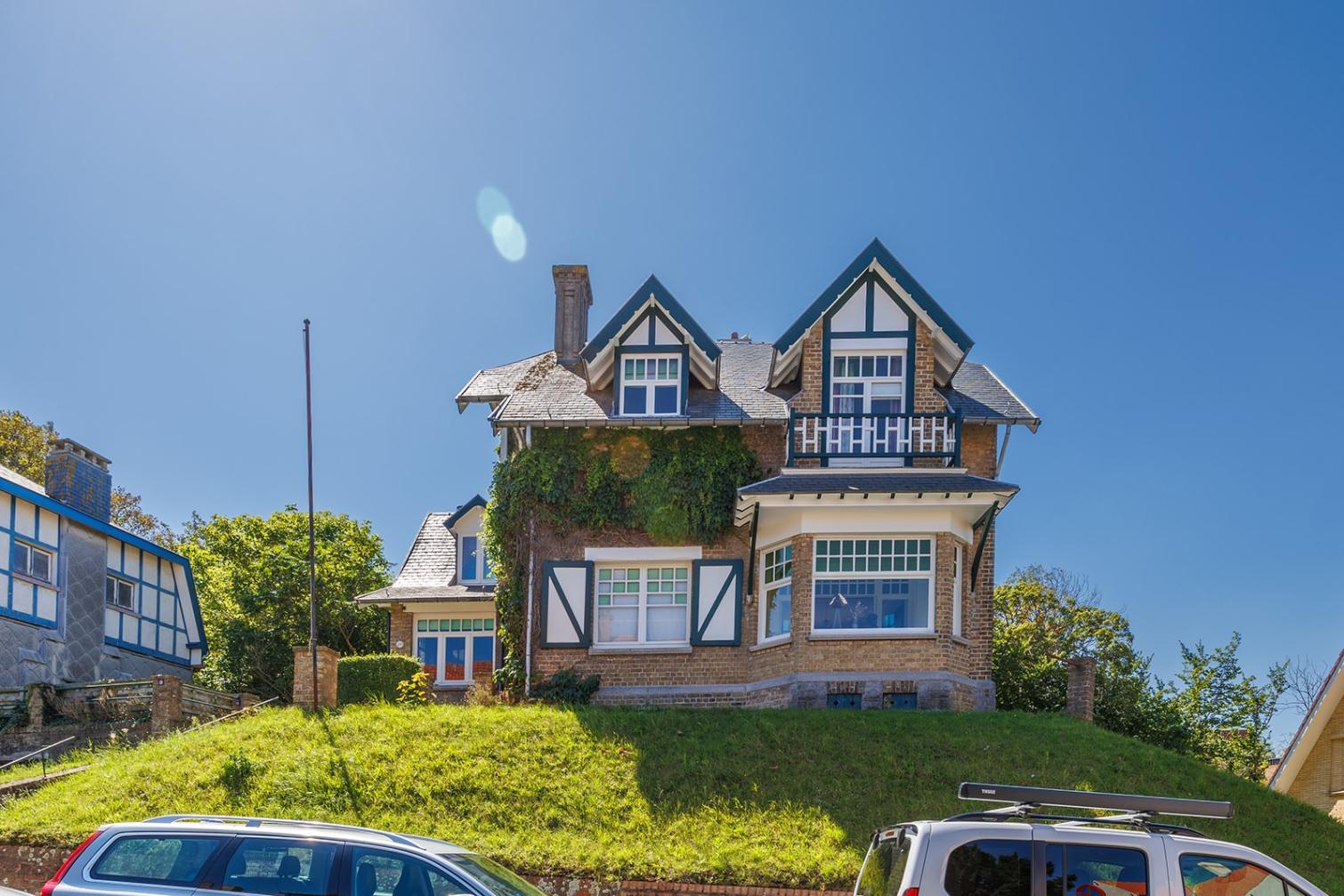
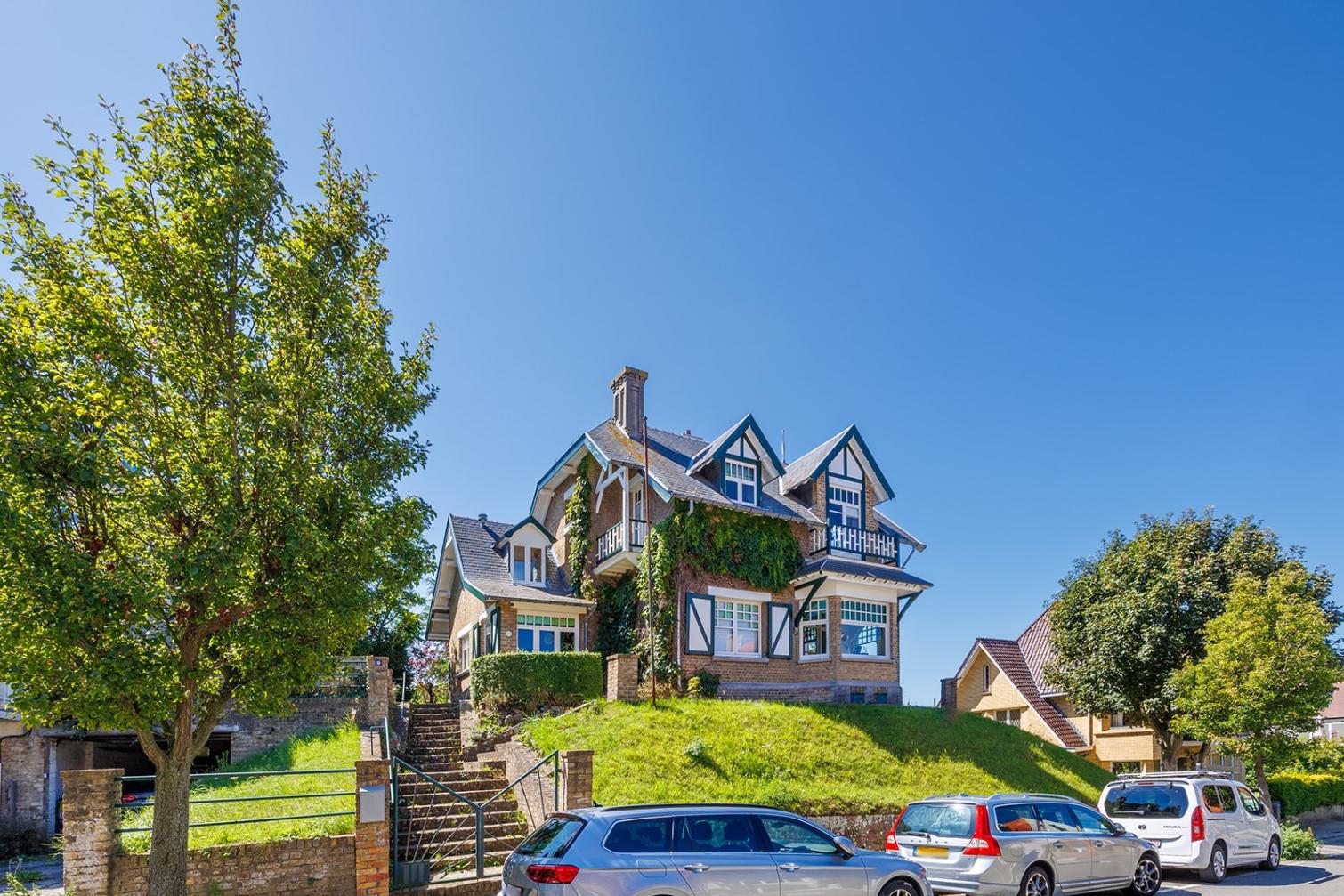
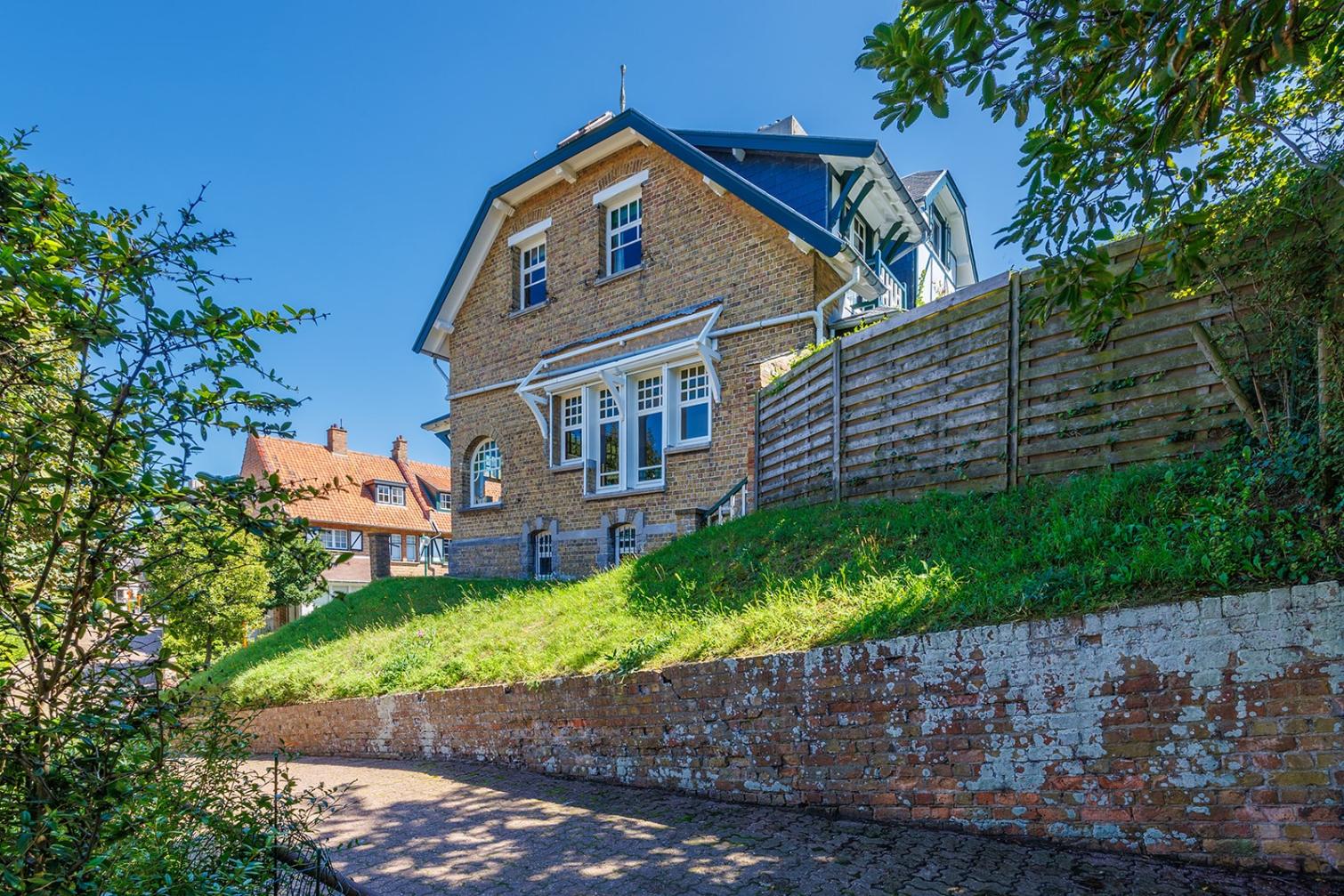
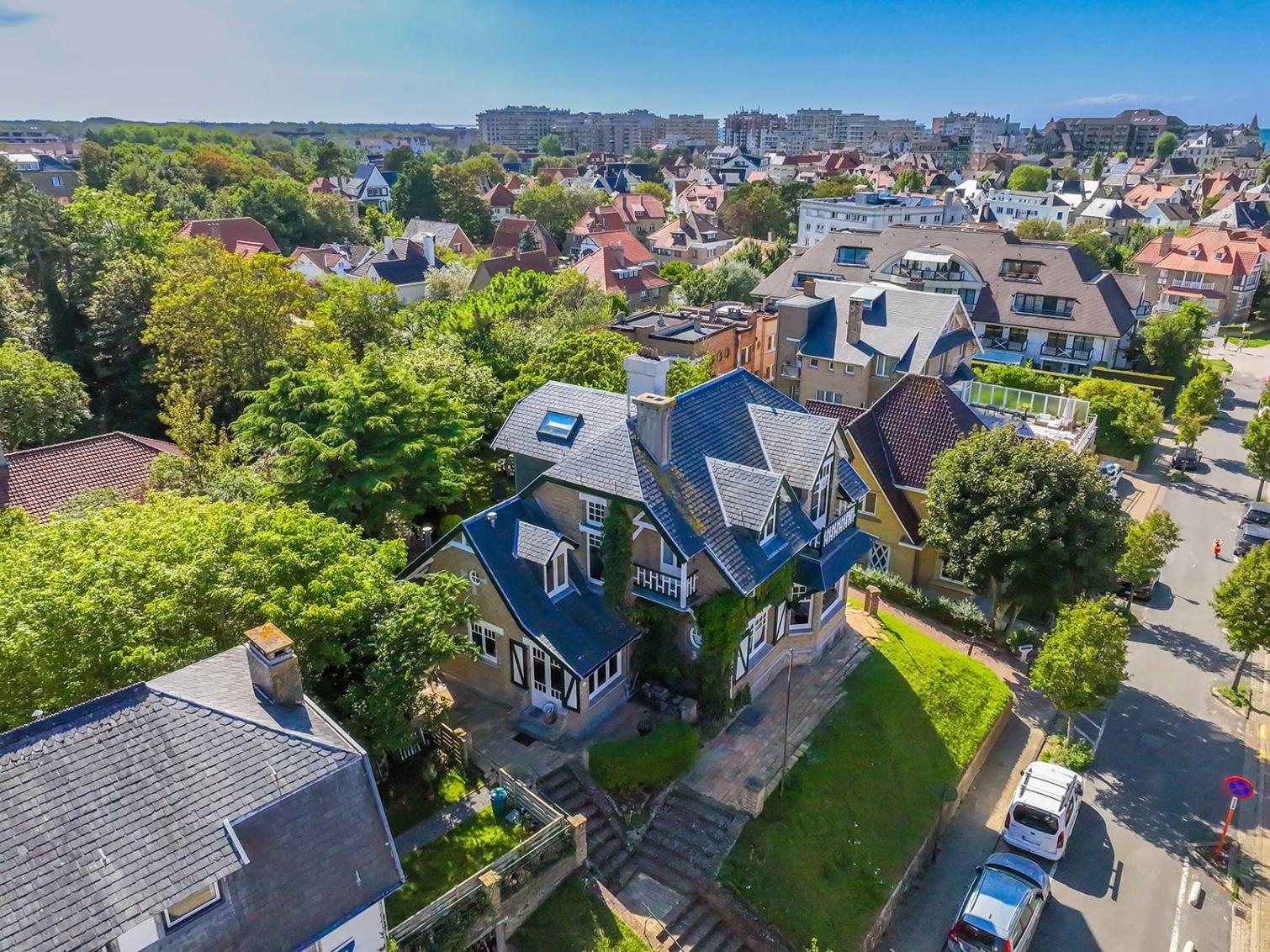
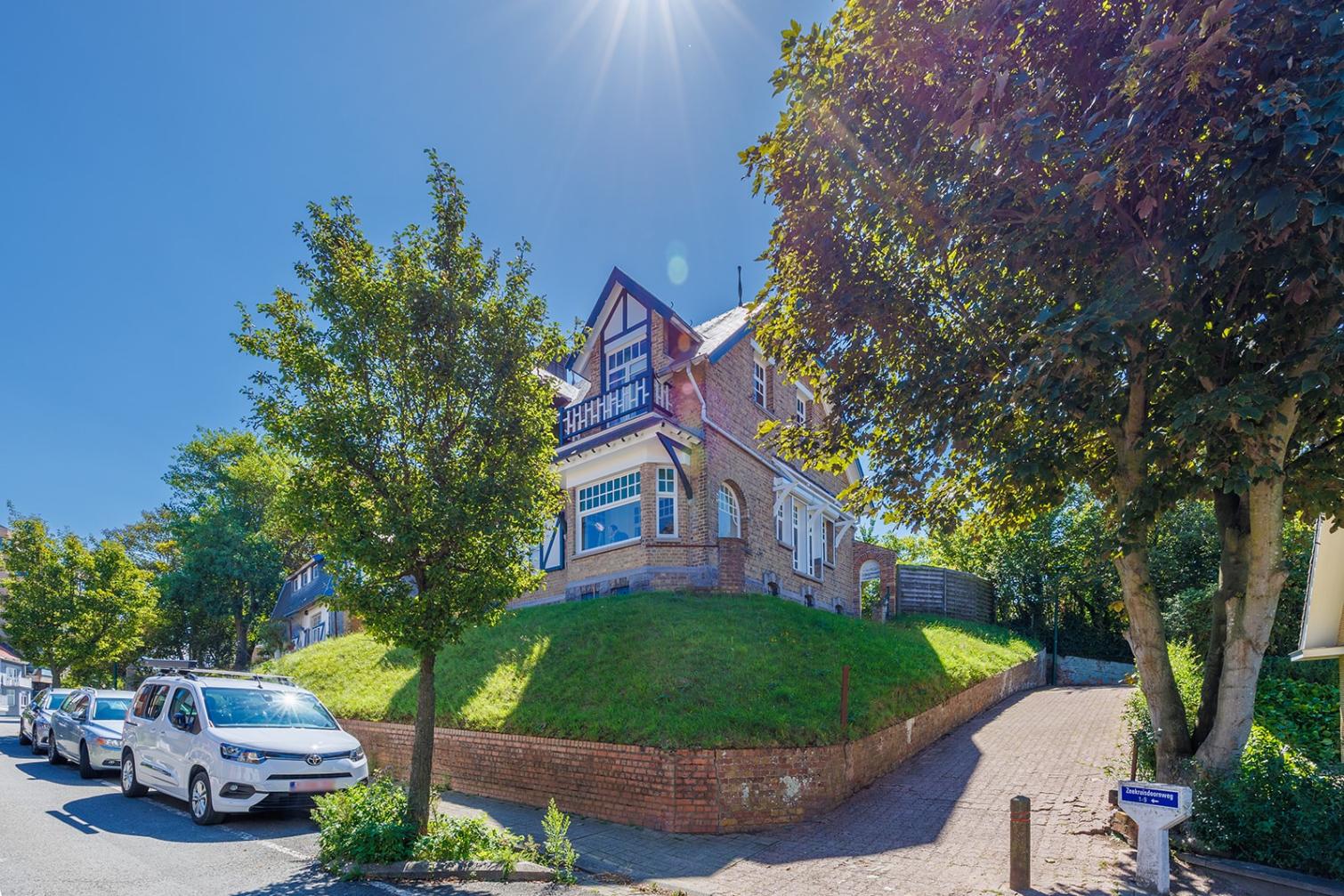
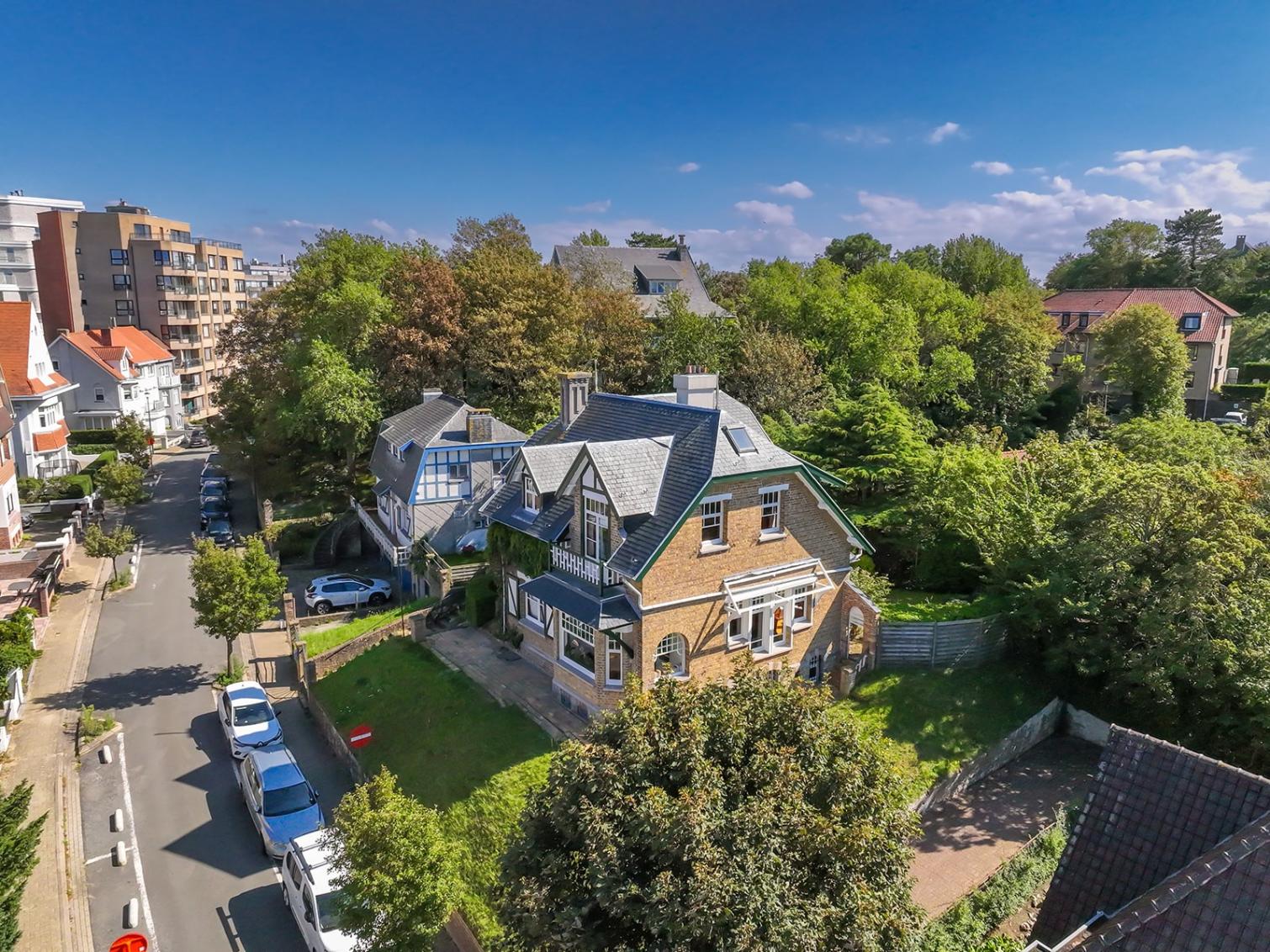
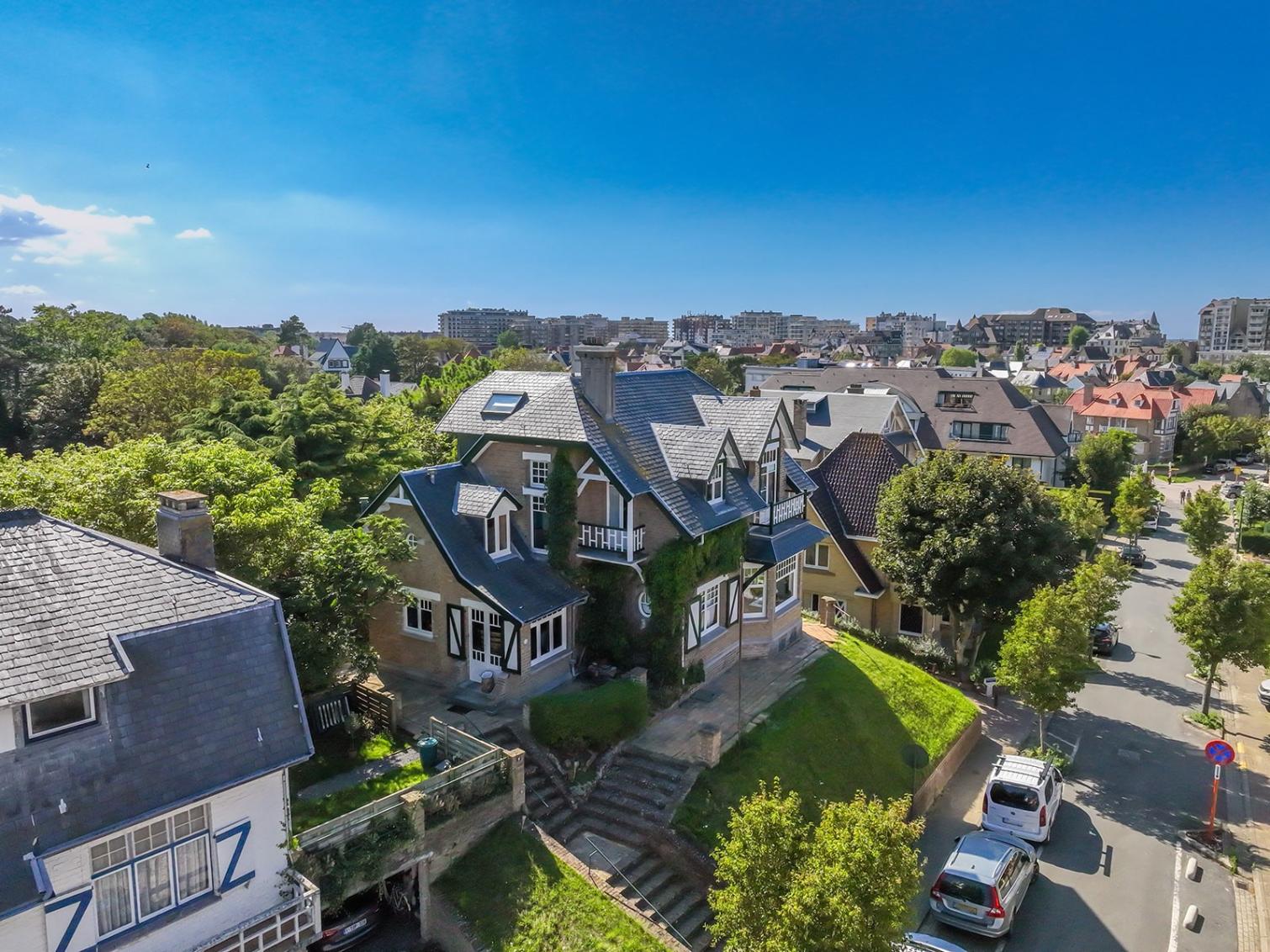
In 1907, Firmin Dutrieux, a clerk from Elsene, had this corner house in the Dumontwijk built as a listed building. The original name of the villa is Désiré. In 1929, the house was expanded.
Photo gallery

The architect(s)
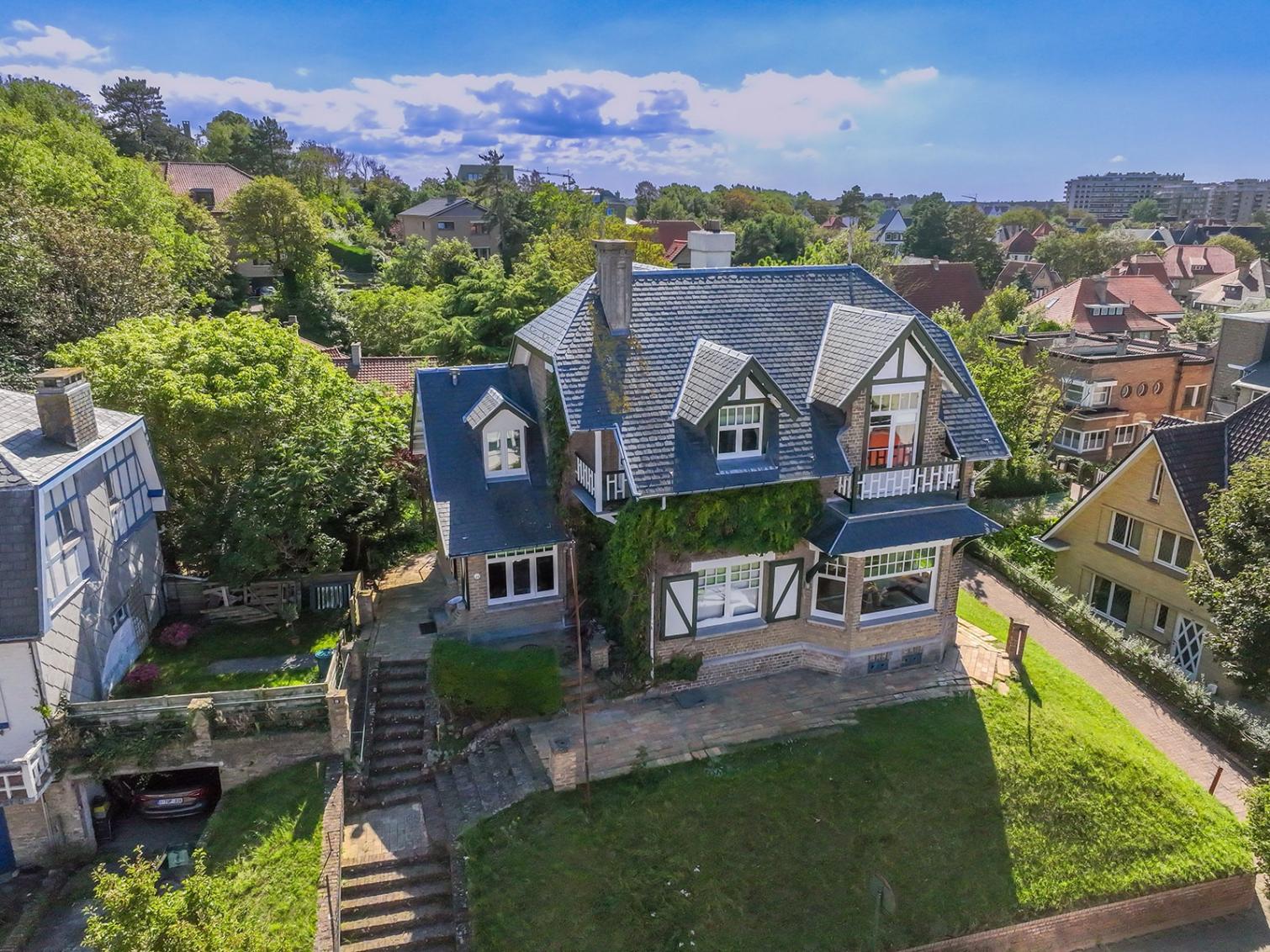
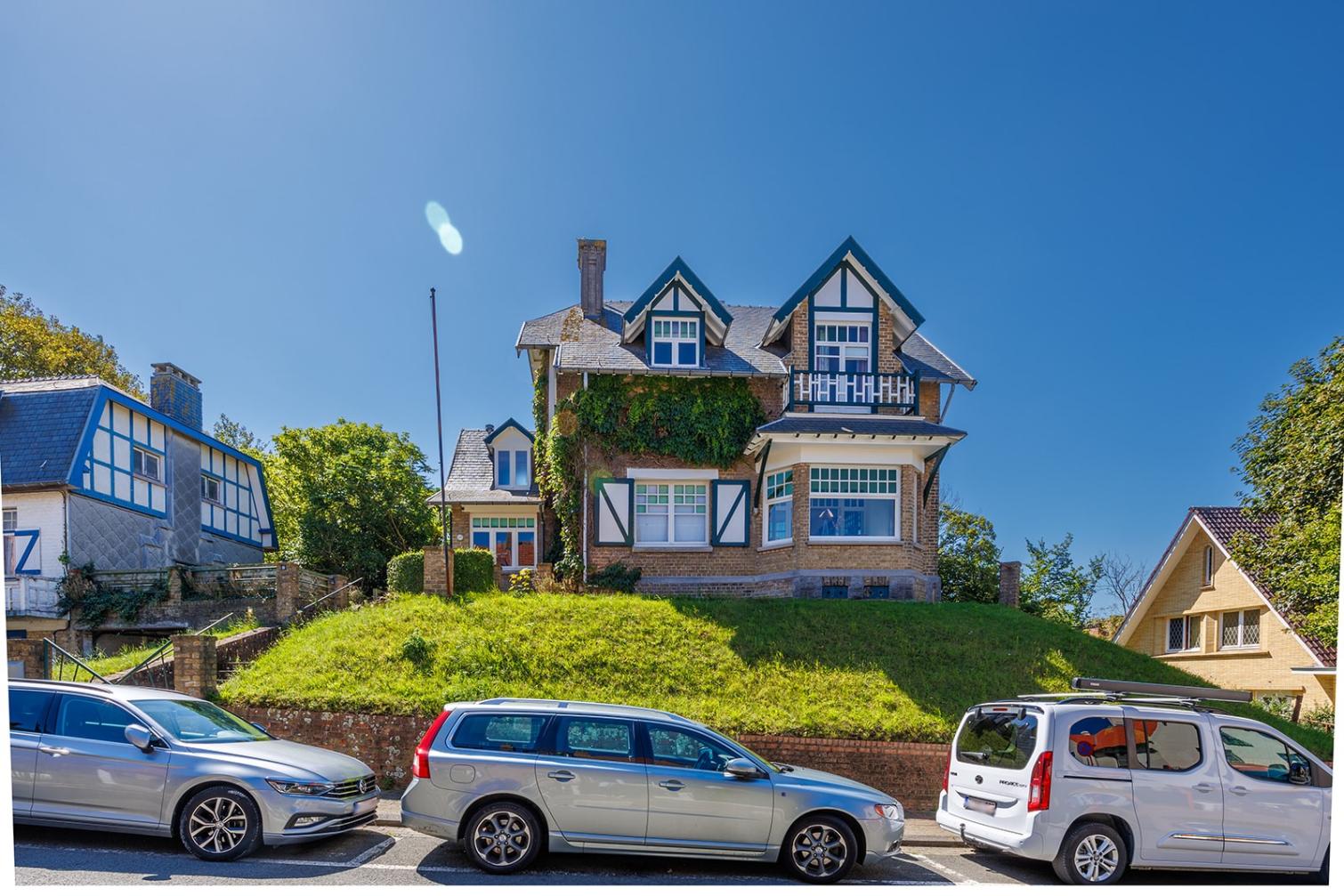
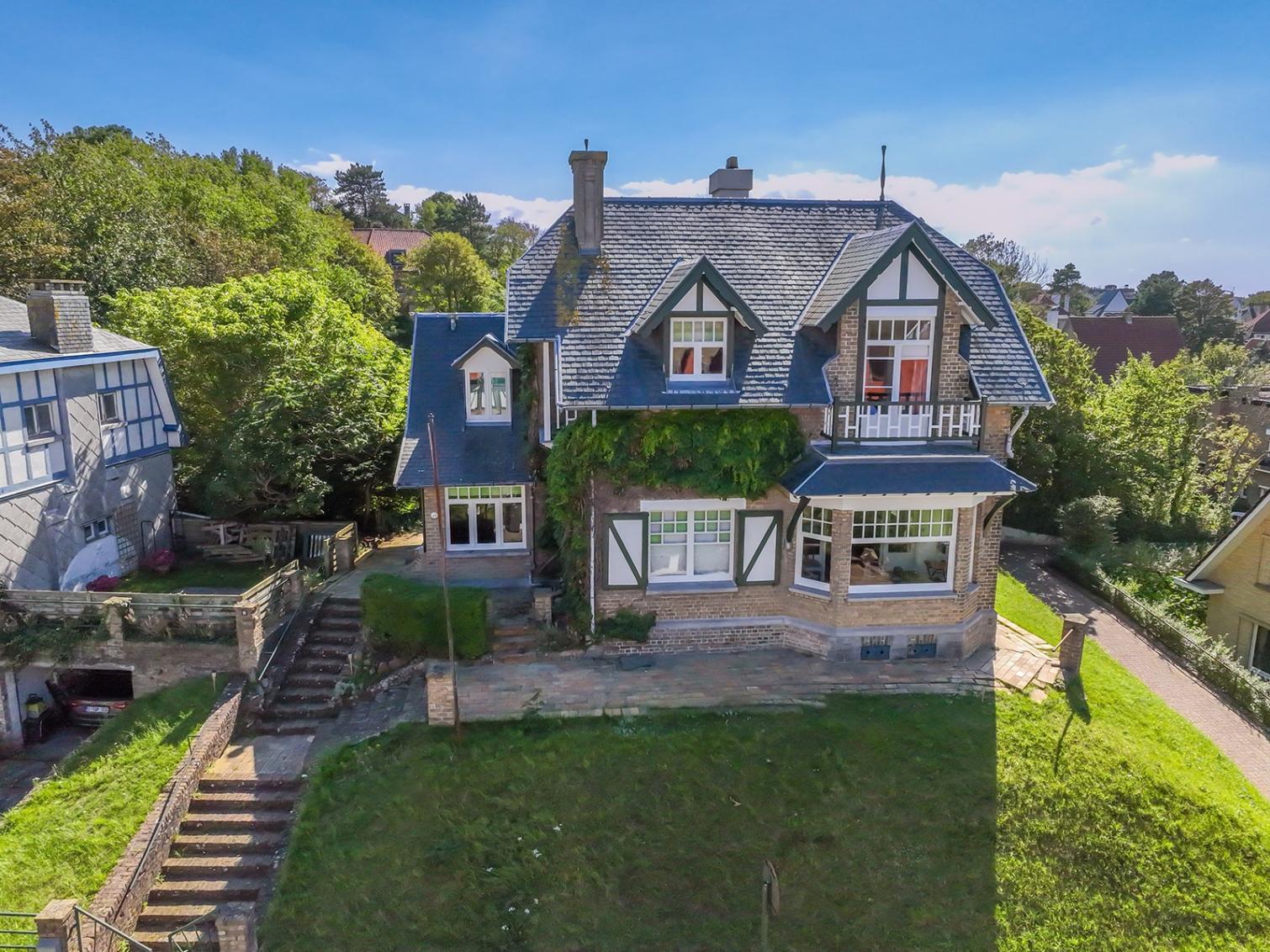
It was most likely designed by the architects Albert and Alexis Dumont. Originally, villa De Strandgaper towered on a dune, making nature an important part of the architecture. The house is adapted to the natural layout of the plot, among other things, by means of staircases that bridge the level differences. During the belle époque era, the garden of this villa was entered through a typical entrance gate.
Exterior
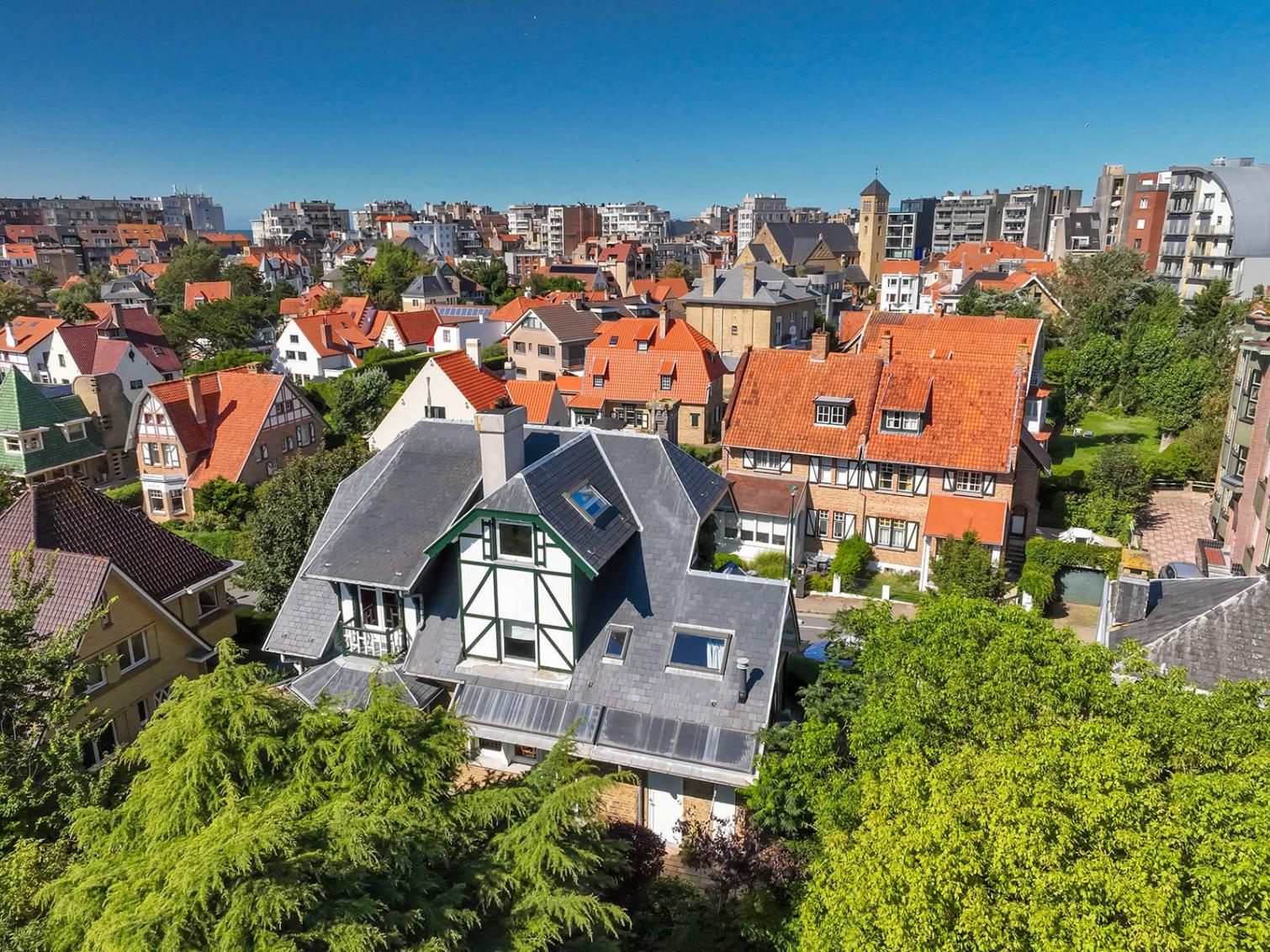
The typical cottage style can be found here in the characteristic roofs, the painted woodwork and the pseudo-timbering. It is also striking that each facade is designed differently, as uniformity and monotony are anything but characteristic of cottage architecture. This, together with the use of different types of windows and the play of recessed and protruding wall sections and blunted corners, creates an intricate and irregular volume.
Interior
Villa De Strandgaper has a stunning symbiosis between the building and its interior. Integration, unity and the right proportions are the key words here. The irregular facade corresponds to a logic that we find in the floor plan. The architects started from a simple square floor plan, which they then divided into simple rooms. In their designs, the hallway is always in a central place and forms the division between the living space and the staircase. The staircase no longer has a monumental function within the hallway, but is often a room in itself.
As cottages are originally summer homes, the interior is basic. Wood is used for the floors, the ceiling, the mantelpiece and the interior doors. This choice of material is in line with the ideas of the English Arts and Crafts Movement. Wood is associated with domestic warmth and security. Not only the use of wood, but also the chimney and the fireplace are typical features of the English cottage style.